
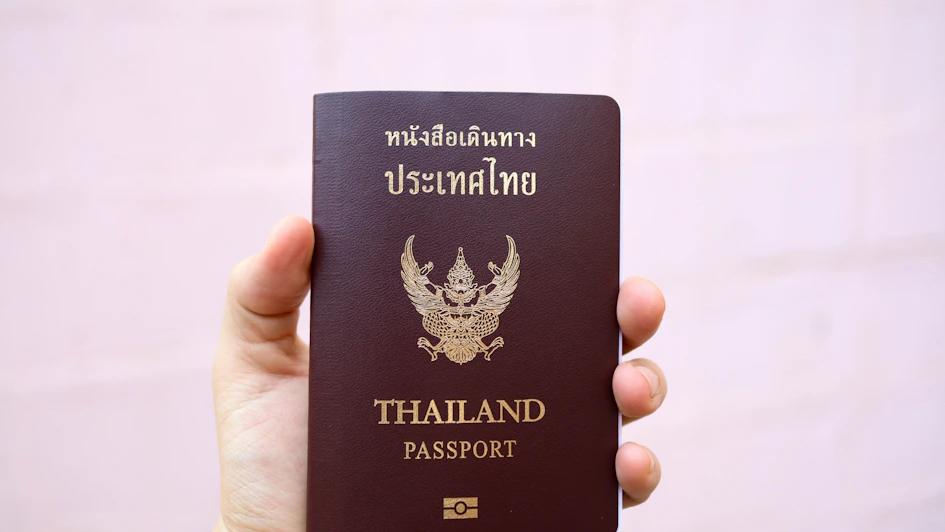
Thailand Tourist Visa Requirements: The Complete 2025 Guide

You’ve booked the flight. You can practically taste the Pad Thai and feel the humidity hitting your face as you step out of Suvarnabhumi Airport.
But then, the panic sets in.
You start Googling entry rules, and suddenly you’re drowning in a sea of conflicting advice, outdated forum posts, and confusing government jargon.
Does your country get an exemption? Do you need to show a bank statement? What exactly is an E-Visa?
Navigating thailand tourist visa requirements doesn’t have to be a nightmare. In fact, once you strip away the bureaucratic language, it is quite straightforward.
I have been through this process countless times, from the old-school paper applications at the consulate to the modern digital systems.
This guide is designed to cut through the noise. We are going to look at exactly what you need to get that stamp in your passport so you can focus on the fun stuff—like deciding which island to visit first.
The Golden Rule: Check Your Passport First
Before we even talk about visas, pull out your passport.
This is the number one reason travelers get turned away at the airline check-in counter, long before they even reach Thai immigration.
Your passport must have at least six months of validity remaining from your date of entry. This is non-negotiable.
If your passport expires in five months and two weeks, you are not getting on that plane.
You also need at least one empty page for the visa stamp, though I always recommend having two just to be safe.
Do You Actually Need a Visa? (The Exemption Scheme)

Here is the good news: many of you reading this might not need to apply for a visa at all.
Thailand offers a “Visa Exemption Scheme” for passport holders of over 60 countries, including the United States, United Kingdom, Canada, Australia, and most of Europe.
Under this scheme, you can enter Thailand without paperwork for tourism purposes.
However, it is vital to understand the difference between an “exemption” and a “visa.”
An exemption means you just show up. A visa requires prior approval.
The Tourism Authority of Thailand (TAT) is the official body governing tourism promotion, and they provide clear guidelines on who qualifies for easy entry.
According to the Tourism Authority of Thailand, travelers from approved countries can enter using the exemption scheme provided they hold a valid passport and proof of onward travel. You can verify the specific list of countries on their Passport & Visa guide.
If you enter under this scheme, you generally get a 30-day stamp (though this is occasionally extended to 45 days during tourism promotion periods, so always check the current rule before flying).
The Single Entry Tourist Visa (SETV)

If you want to stay longer than 30 days, or if your country isn’t on the exemption list, you need the Single Entry Tourist Visa (SETV).
This is the standard “60-day tourist visa.”
It allows you to stay in Thailand for 60 days, and it can be extended for another 30 days once you are inside the country.
That gives you a total of nearly three months of bliss.
To get this, you must apply before you travel. You cannot get this at the airport.
ThaiEmbassy.com is a leading resource for simplifying these consular rules for international travelers.
As explained by ThaiEmbassy.com in their detailed breakdown, the Single Entry Tourist Visa is valid for entering Thailand within 3 months from the date of issue, meaning you should apply relatively close to your travel date. You can read the full breakdown of the Single Entry Tourist Visa here.
Core Documents Required for the SETV
Here is the checklist you need to gather. Do not skip any of these, or your application will be rejected.
1. The Application Form (E-Visa)
Most embassies have moved to an online E-Visa system. You will create an account, fill in your details, and upload documents digitally.
2. Passport Bio Page
A clear scan of your passport information page. No fingers covering the numbers, and no glare.
3. Passport Photo
A digital photo taken within the last six months. It must be formal—no sunglasses, no hats, and a white background. If you upload a selfie from a bar, you will be rejected.
4. Proof of Travel (Flights)
You typically need to show a confirmed flight into Thailand and a flight out of Thailand. The flight out must be within the 60-day window.
Pro Tip: If you aren’t sure when you want to leave, look into “onward ticket” services that allow you to rent a flight reservation for 48 hours to satisfy this requirement.
5. Proof of Accommodation
You need to show where you are sleeping. This usually means a hotel booking confirmation for at least the first few nights.
If you are staying with a friend, you will need an invitation letter from them and a copy of their ID signed by them.
6. Financial Proof (The Tricky Part)
This is where most people get stuck.
You must prove you have enough money to support yourself.
The standard requirement is a bank statement showing a balance of at least 20,000 THB (approx. $600 USD) per person, or 40,000 THB per family.
Crucial Detail: The name on the bank statement must match your passport exactly. If you use a joint account or a business account, you may need additional affidavits.
Visa on Arrival (VoA): Know the Difference
Beginners often confuse “Visa Exemption” with “Visa on Arrival.”
They are not the same thing.
Visa on Arrival is available for citizens of specific countries (like China and India) who do not get the automatic exemption but can pay a fee at the airport to enter.
The fee is usually 2,000 THB, payable in cash.
This visa typically only grants you 15 days of stay (though this can fluctuate with government policy).
If you are eligible for the Exemption (30 days, free), do not stand in the Visa on Arrival line. You will waste money and time.
The Special Tourist Visa (STV): Is It Still Relevant?
During the pandemic, Thailand launched the Special Tourist Visa (STV) to attract long-stay visitors willing to undergo quarantine.
While the world has opened back up, the concept of long-stay tourism remains popular.
However, the STV has specific conditions that differ from the standard tourist visa, often requiring more stringent financial proof and insurance.
ThaiEmbassy.com provides critical context on these specialized long-term options.
According to their analysis of the Special Tourist Visa, this category was designed specifically for long-stay tourists and requires proof of accommodation for the entire duration of the stay. You can learn more about the STV requirements here.
For most average travelers planning a 2-week to 2-month trip, the STV is overkill. Stick to the standard SETV or the Exemption.
Entering via Land Borders: The “Border Run” Rules
Perhaps you are backpacking across Southeast Asia, coming in from Cambodia or Laos by bus.
The rules for land entry are stricter than flying in.
This is to prevent people from living in Thailand permanently by just hopping across the border every month (the classic “visa run”).
ThaiEmbassy.com tracks the frequent changes to immigration enforcement at checkpoints.
As noted in their updates on border entry rules, foreign nationals entering via land borders under the Visa Exemption scheme are limited to doing so only twice per calendar year. You can check the details on border entry limits here.
If you plan to cross by land more than twice, you will need to apply for a proper visa at a Thai consulate in a neighboring country before you arrive at the border.
Extending Your Stay: The “30-Day Bonus”
One of the best features of the Thai tourist visa system is the extension.
Whether you arrived on a 30-day Exemption or a 60-day Tourist Visa, you can almost always extend your stay by 30 days at a local Immigration Office.
Here is how to do it:
- Go to Immigration: You can find offices in Bangkok, Chiang Mai, Phuket, Samui, and most major provinces.
- Bring Documents: Passport, copies of your passport pages, a passport photo (4x6cm), and the TM.7 application form.
- Pay the Fee: It costs 1,900 THB (cash only).
- Wait: Usually, you walk out with the stamp the same day.
This means a 60-day visa effectively becomes a 90-day visa.
Common Mistakes That Lead to Rejection
I have seen friends get their visa applications rejected for silly reasons. Don’t let this be you.
1. The “Screenshot” Bank Statement
Immigration officers hate low-effort screenshots. They want to see a formal statement that clearly shows your name, the bank’s name, the currency, and the balance. If you use online banking, download the official PDF statement. Do not just screenshot your app.
2. Unclear Accommodation Proof
Booking a hotel for one night and leaving the rest blank can sometimes raise red flags if you are applying for a 60-day visa. While you don’t always need to book all 60 nights, showing a solid itinerary for the first week or two helps establish credibility.
3. Applying Too Early
Remember, the single-entry visa is valid for 3 months from the date of issue. If you apply 4 months before your trip, your visa will expire before you even board the plane.
4. Ignoring the “Consular Jurisdiction”
If you are American, but you are currently backpacking in France, you generally cannot apply for a Thai visa at the embassy in Paris unless you have residency there. You usually must apply through the embassy in your home country or a country where you have legal residence.
Practical Tips for a Smooth Application
- Print Everything: Even if you have an E-Visa, print a copy of the approval email. Immigration officers at the airport sometimes ask for paper proof.
- Carry Cash: When entering Thailand, technically you are required to have 10,000 - 20,000 THB in cash on your person to prove you aren’t destitute. They rarely check, but if they do and you don’t have it, they can deny entry.
- Dress Smart at Immigration: If you go to extend your visa, do not wear a swimsuit or a beer tank top. Wear a t-shirt and shorts at a minimum. Respecting the officials goes a long way.
FAQ: Your Burning Questions Answered
Can I work on a Tourist Visa?
Absolutely not. This is strictly illegal. If you are caught working (even digital nomad work in a co-working space can be a gray area, though rarely enforced), you face deportation and blacklisting. If you want to work, look into the Non-Immigrant B Visa or the LTR Visa.
Do I need travel insurance?
For the standard Tourist Visa or Exemption, travel insurance is currently not mandatory for entry (as of late 2024/early 2025). However, it is highly recommended. If you get into a scooter accident—which happens frequently—Thai hospitals can be expensive for foreigners. For the STV (Special Tourist Visa), insurance is mandatory.
What happens if I overstay my visa?
If you stay longer than your stamp allows, you are “overstaying.” The fine is 500 THB per day, capped at 20,000 THB. You pay this at the airport when leaving. However, if you are caught by police outside the airport while on overstay, you can be arrested, jailed, and deported. Do not risk it. Just go get the extension.
Can I convert a Tourist Visa to a Retirement Visa?
Yes, it is possible. You can enter on a Tourist Visa and then apply to convert it to a Non-Immigrant O (Retirement) visa at the immigration office in Bangkok, provided you meet the financial requirements (800,000 THB in a Thai bank). It is a complex process, but many expats do it.
Conclusion
Getting your paperwork sorted for Thailand doesn’t have to be stressful. It is just a series of checkboxes.
Start by checking your passport validity. Then, decide if the 30-day exemption is enough or if you need the 60-day tourist visa. Gather your bank statements, book your flight, and apply online a few weeks before you travel.
Once you have that visa in hand, you can stop worrying about bureaucracy and start planning the important things—like whether you’re going to eat Mango Sticky Rice or Pad Krapow first.
Safe travels!