
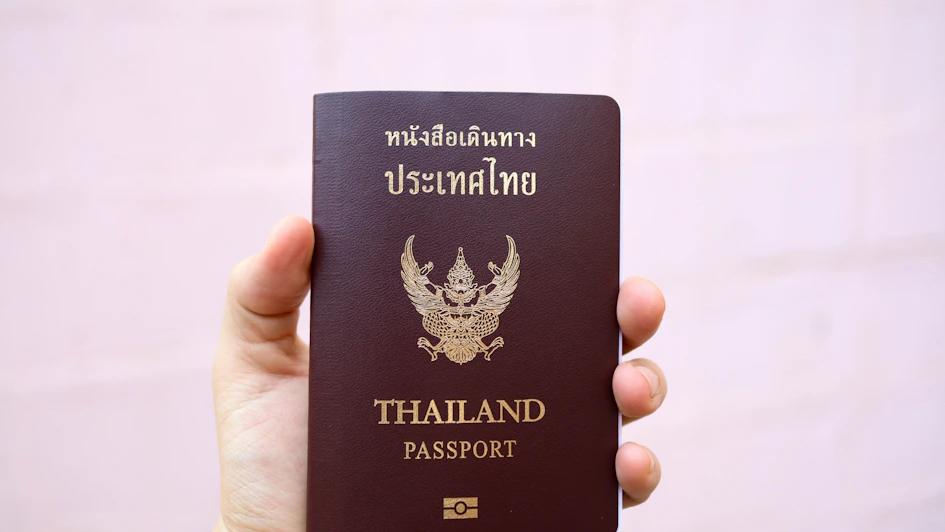
Thailand Visa Requirements: The Complete 2025 Guide for Travelers

You can almost smell the street food and feel the humidity just thinking about it.
But before you can sip a coconut on a beach in Phuket or navigate the chaotic streets of Bangkok, you have to get past one formidable hurdle: Immigration.
Nothing kills the holiday vibe faster than standing in a two-hour queue only to realize you don’t have the right paperwork. I’ve been there, sweating through my shirt at Suvarnabhumi Airport, hoping the officer doesn’t ask for a printed return ticket I forgot to book.
Navigating thailand visa requirements can feel like trying to solve a puzzle where the pieces keep changing shape. The rules are strict, but they are manageable if you know exactly what to look for.
Whether you are planning a quick two-week vacation or a months-long backpacking adventure, this guide covers everything you need to know to breeze through the border.
The Golden Rule: Check Your Passport First
Before we even talk about visas, we need to talk about your passport. This is where many beginners trip up before they even leave their home airport.
Thailand is incredibly strict about passport validity. It does not matter if you have a valid visa if your passport is about to expire.
The U.S. Department of State, which provides crucial safety and entry data for American travelers, explicitly states that your passport must be valid for at least six months beyond your date of entry. According to Thailand International Travel Information provided by the State Department, you will likely be denied entry if your passport expires within that six-month window.
I have seen travelers turned away at the check-in counter in Los Angeles because their passport had five months and three weeks left. Do not risk it. Renew it early.
Additionally, make sure you have at least one blank page for the entry stamp, though having two is safer if you plan on extending your stay.
Do You Actually Need a Visa?

Here is the good news: Many of you reading this won’t need to apply for anything beforehand.
Thailand operates a generous scheme called the Visa Exemption. This is not a visa; it is a permission to enter stamped directly into your passport upon arrival.
If you are from the US, UK, Canada, Australia, and many European countries, you can typically fly in and get stamped for a specific duration (historically 30 days, though temporary schemes often bump this to 45 or even 60 days to boost tourism).
However, it is vital to check the current duration allowed for your specific nationality. Lonely Planet, a leading authority in global travel guides, breaks down these nuances clearly. As noted in their guide on Do you need a visa for Thailand?, passport holders from over 60 countries can enter Thailand without obtaining a visa in advance for tourism purposes.
The “Proof” You Might Need
Even with a visa exemption, the immigration officer can ask for proof of two things:
- Onward Travel: A confirmed flight ticket out of Thailand within your exemption period.
- Funds: Proof that you have at least 10,000 THB (per person) or 20,000 THB (per family) in cash.
In practice, they rarely ask for the cash unless you look disheveled or have a history of overstaying. But the return flight? The airline check-in desk at your home airport will almost certainly ask to see this before letting you board.
Visa on Arrival (VoA): Not the Same as Exemption

This is a common point of confusion. “Visa Exemption” is free and automatic. “Visa on Arrival” (VoA) is a paid visa granted at the airport for nationals of specific countries (like India, China, and Taiwan) who do not qualify for the exemption.
If you are eligible for VoA, you have to go to a specific counter before you reach the main immigration line. You will need a photo, the application fee (usually 2,000 THB, payable in cash), and your forms.
World Travel Guide, a trusted resource for international entry requirements, explains that this list of eligible countries changes based on diplomatic agreements. You can verify your specific status in their breakdown of Visa and Passport Requirements, which details which nationalities must pay for this visa upon landing.
Tips for the VoA Line
- Bring the exact change: The officers often don’t have change for large bills.
- Have your photo ready: It needs to be 4x6 cm. If you forget, there is usually a photo booth nearby, but it costs extra and has a line.
- Fast Track: There is often a “fast track” lane for an extra 200 THB. If the line looks like a nightmare, pay the extra few dollars. It is worth it.
The Single Entry Tourist Visa (SETV)
What if you want to stay longer than the exemption allows? Or what if your country doesn’t get an exemption?
You need the Single Entry Tourist Visa (SETV).
You apply for this before you travel, usually via the Thai E-Visa website (if your country is eligible) or at a Thai embassy.
The Benefits:
- Duration: It gives you 60 days upon entry.
- Extendable: You can extend it for another 30 days once you are in Thailand (more on that later).
- Security: You have the visa in hand before you fly, reducing anxiety at the border.
The Requirements:
- Passport: Valid for 6+ months.
- Photo: Digital or physical depending on application method.
- Flight Itinerary: Proof of entry and exit.
- Accommodation: Booking confirmation for at least the first few nights.
- Bank Statement: Usually requires showing a balance of roughly $700–$1,000 USD (check your local embassy for the exact figure).
The “Digital Nomad” & Long-Term Options
If you are trying to live in Thailand while working remotely, the tourist visa is a grey area. Technically, you cannot work on a tourist visa.
However, Thailand has introduced the Long-Term Resident (LTR) visa and the Destination Thailand Visa (DTV) (a newer initiative) to target remote workers. There is also the Thai Elite Visa, which is essentially a “pay-to-stay” membership that grants you entry for 5 to 20 years.
These are complex and expensive. For most beginners just testing the waters, the 60-day Tourist Visa is the standard starting point.
Extending Your Stay: The “30-Day Stamp”
Let’s say you entered on a 30-day exemption or a 60-day tourist visa, and you are having too much fun to leave. You don’t have to leave the country immediately.
You can visit a local Immigration Office inside Thailand to apply for a 30-day extension. This costs 1,900 THB.
The Process:
- Go to the nearest Immigration Office (in Bangkok, it is at Chaeng Watthana—it is huge and busy).
- Fill out form TM.7.
- Provide copies of your passport pages and a passport photo.
- Pay the fee.
- Wait for the stamp.
Pro Tip: Go early. If you arrive at 10:00 AM, you might be there until 3:00 PM. If you arrive at 7:30 AM, you might be out by noon.
Border Runs: Land vs. Air
Some travelers try to stay indefinitely by leaving the country and coming right back to get a new stamp. This is called a “border run.”
Thailand has cracked down on this.
- Land Borders: You are generally limited to two entries per calendar year via land borders.
- Air Borders: There is no official hard limit written in stone, but if the officer sees you have been doing this repeatedly (e.g., spending 6 months in Thailand on tourist stamps), they may start asking questions or deny entry.
If you plan to stay long-term, get a proper long-term visa. Relying on back-to-back tourist entries is risky in 2025.
Common Mistakes That Will Get You Rejected
I have seen people panic at the counter because of simple errors. Avoid these pitfalls to ensure your trip starts smoothly.
1. Damaged Passports
This is surprisingly common. If your passport is fraying, has water damage, or—crucially—is missing a page, Thai immigration can deny you entry. Treat your passport like gold.
2. No Proof of Onward Travel
As mentioned earlier, airlines are the gatekeepers here. If you have a one-way ticket to Bangkok and no visa, the airline might not let you board the plane. If you plan to leave by bus or train later, that can be hard to prove.
The Fix: Buy a cheap “throwaway” flight out of Thailand to a neighboring country like Malaysia or Vietnam to satisfy the requirement, or use a ticket-renting service.
3. Overstaying Your Visa
This is a big one. Do not overstay.
If you stay past the date stamped in your passport, you are fined 500 THB per day (up to a max of 20,000 THB). If you are caught by police outside the airport while on an overstay, you can be deported and banned from re-entering.
It is not worth the stress. If you need more time, pay the 1,900 THB for the legal extension.
Entering with Medication
While not strictly a “visa” requirement, it is a border entry requirement. Thailand has strict drug laws.
Some medications that are over-the-counter in the West are illegal restricted substances in Thailand (specifically those containing certain stimulants). Always bring your prescription in English and keep pills in their original bottles.
Summary Checklist for Entry
To wrap this up, here is your mental checklist before you head to the airport:
- Passport: Valid for 6+ months, no damage, blank pages available.
- Visa Status: Checked if you are Exempt, need VoA, or need a pre-approved Tourist Visa.
- Flights: Have a return or onward ticket booked within your allowed stay duration.
- Accommodation: Have the address of your first hotel handy (you need to write it on the arrival card if they still issue them, or provide it verbally).
- Cash: Carry some backup cash just in case you are questioned.
FAQ: Your Questions Answered
Can I extend a Visa on Arrival?
Historically, the Visa on Arrival (15 days) was harder to extend than the Visa Exemption. However, rules fluctuate. In many cases, you may only get a 7-day extension for “medical reasons” or similar, rather than a full 30 days. It is safer to assume you cannot easily extend a VoA for tourism and plan your trip duration accordingly.
What happens if I overstay by just one day?
If you overstay by a few hours or one day, you will usually just pay the fine (500 THB) at the airport immigration desk before you fly out. You will get a small stamp noting the overstay. While a one-day overstay rarely affects future travel, repeated overstays will land you on a watchlist.
Do I need a visa for a connecting flight?
If your connecting flight is booked on a single ticket (your bags are checked through to the final destination) and you do not leave the transit area, you typically do not need a visa. However, if you have to collect your bags and check in again (common with budget airlines), you must pass through immigration, meaning you need a visa or exemption.
Final Thoughts
Thailand is one of the most welcoming countries on earth, but their bureaucracy is serious. The key to a smooth arrival is preparation.
Don’t leave your thailand visa requirements check until the night before. Look at your passport expiration date right now. Go on, check it.
Once you have that stamp in your passport and you walk out those sliding doors into the heat of Bangkok, the hassle will be instantly forgotten. Order a Pad Kra Pao, grab a taxi, and enjoy the Land of Smiles. You made it.